What Makes Custom Cleanroom Design Services Essential
If you've ever stepped inside a pharmaceutical manufacturing facility, a semiconductor fab, or a medical device production floor, you already know that these environments operate by a completely different set of rules than a typical workspace. The air is filtered, the pressure is controlled, the surfaces are seamless, and every detail has been engineered with purpose. None of that happens by accident. It happens because someone invested in the right cleanroom design services from the very start.
Whether you're building a new facility from scratch or retrofitting an existing space, getting the design right matters more than most people realize. And that's exactly what this article is here to break down.

Table of Contents
Why Cleanroom Design Matters
A clean room isn't just a room that's been cleaned. It's a precisely controlled environment where airborne particles, temperature, humidity, and pressure are all kept within strict limits. The ISO classification system determines the allowable particle counts per cubic meter of air, and those classifications have real consequences for how a space needs to be designed, built, and maintained.
When the design phase is rushed or handled by someone without specific cleanroom engineering experience, the problems don't always show up immediately. They show up during your first regulatory audit, during your certification process, or worse, after a contamination event that compromises your product and your reputation. Getting cleanroom design consulting involved early isn't a luxury. It's a risk management decision.
The design of a cleanroom directly affects how compliant it will be, how efficient the workflow inside it will be, and how much it will cost to operate over time. Decisions made on day one ripple forward for the entire life of the facility.
What Goes Into a Custom Cleanroom Build
The term "cleanroom design build" refers to a project delivery method where a single team handles both the design and construction of the controlled environment. This integrated approach has real advantages. When the engineers designing the space are also the ones building it, there's less room for miscommunication, fewer change orders, and a cleaner path from concept to completion.
A custom cleanroom build typically involves a site assessment, a design phase that accounts for your specific classification requirements and workflow needs, and a construction phase that includes wall systems, flooring, ceilings, lighting, electrical, and mechanical work. It's not a one-size-fits-all process, and the best outcomes come when the team treats it that way.
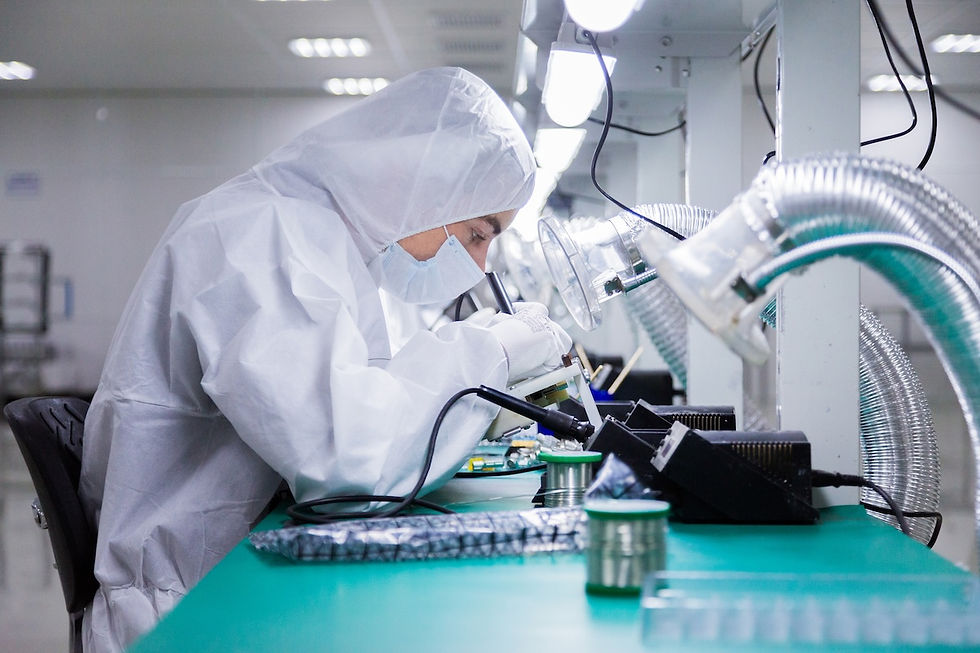
The cleanroom contractor you choose plays a significant role in how smoothly all of this goes. An experienced cleanroom builder will know how to coordinate trades, manage sequencing, and anticipate the kinds of issues that derail timelines on less experienced teams. Cleanroom construction isn't standard commercial construction. The tolerances are tighter, the materials are more specific, and the consequences of errors are more significant.
The Role of Cleanroom HVAC in Contamination Control
If there's one system that defines a clean room more than any other, it's the HVAC system. Cleanroom HVAC does far more than heat and cool a space. It controls airflow patterns, maintains positive or negative pressure differentials, removes particulate contamination, and manages humidity. All of these functions work together to keep the controlled environment stable and compliant.
The design of the HVAC system has to account for the ISO classification of the space, the activities happening inside it, the number of people who will be working there, and any equipment that generates heat or particles. A system that's undersized or improperly designed won't just fail to maintain cleanliness. It will actively work against you by creating turbulence, dead zones, or pressure imbalances that undermine the whole purpose of the space.
High-efficiency particulate air (HEPA) filtration is standard in most clean rooms, and ASHRAE guidelines provide a strong framework for cleanroom HVAC design. But guidelines don't replace engineering judgment. The specific layout of supply and return air, the number of air changes per hour, and the integration of the HVAC system with the building envelope all require hands-on cleanroom engineering expertise.
Industry-Specific Cleanroom Design
One of the most important things to understand about custom cleanroom design services is that the requirements vary significantly by industry. A cleanroom built for semiconductor manufacturing has very different needs than one built for compounding pharmacy work, and neither of those looks quite like a clean room designed for aerospace component assembly.
Pharmaceutical and biotech clean rooms often need to comply with FDA 21 CFR Part 211 and EU GMP guidelines. Semiconductor facilities follow SEMI standards. Medical device manufacturers work within ISO 13485 frameworks. Each of these regulatory environments shapes what the cleanroom needs to look like, how it needs to perform, and how it needs to be documented.
This is why generic approaches fall short. Industry-specific cleanroom design means the team working on your project understands the regulatory environment you're operating in, not just the construction side of things. The design has to support compliance from the ground up, not try to retrofit compliance after the fact.
Other considerations that vary by industry include wastewater management requirements, chemical storage and handling, gowning room layouts, pass-through chamber configurations, and the specific materials used for surfaces and finishes. Each of these details adds up to a facility that either supports your operations or creates friction in them.
Cleanroom Certification and Compliance
Building the cleanroom is only part of the work. Once construction is complete, the space has to be tested and certified to verify that it actually performs to its design specifications. Cleanroom certification typically involves a series of tests covering airborne particle counts, airflow velocity and uniformity, pressure differentials, temperature and humidity, HEPA filter integrity, and recovery time after contamination events.
These tests are conducted according to standards like ISO 14644-3, and the results need to be documented in a way that satisfies both internal quality systems and external regulatory bodies. If the space doesn't pass, you need to know why, what needs to be corrected, and how to retest efficiently.
Working with a team that has cleanroom certification experience built into the project from the start makes this process much less stressful. When the design and construction have been done correctly, certification is a confirmation of the work, not a discovery process.
What Cleanroom Construction Management Actually Involves
Cleanroom construction management is a specialty in its own right. On a typical commercial construction project, the construction manager coordinates trades, manages schedules, and keeps the budget on track. On a cleanroom project, all of that still applies, but the stakes around sequencing, cleanliness protocols during construction, and quality control are considerably higher.
For example, certain work has to happen in a specific order to protect the integrity of already-installed systems. Construction debris and dust that would be a minor inconvenience in a standard project can contaminate surfaces that are difficult and expensive to re-clean. Personnel entering partially constructed clean room areas may need to follow gowning protocols even during construction.
A cleanroom engineer embedded in the construction management process can catch deviations before they become problems. This is especially important during the mechanical and electrical rough-in phases, where decisions made inside walls and ceilings will be invisible once the project is complete but will affect performance for years.
On larger projects, cleanroom construction management also includes coordinating with equipment vendors, planning for validation activities, and managing the handoff from construction to the operations team. Projects that handle this transition well tend to have smoother validation cycles and faster paths to full production.
DesignTek Consulting: Your Partner in Custom Cleanroom Design Services
At DesignTek Consulting, we approach every project with the understanding that your clean room is the foundation of your operation. From initial cleanroom design consulting through certification and beyond, our team brings the cleanroom engineering expertise and construction management experience to deliver controlled environments that work the way they're supposed to, the first time.
If you're planning a new facility, expanding an existing one, or trying to figure out why your current space isn't performing to spec, we'd like to hear about it. Contact us to learn more about our services and see how we approach the work. Reach out to our team today and let's talk about what the right custom cleanroom design services look like for your project.


Comments